
Ventilation Design in Food Processing Facilities
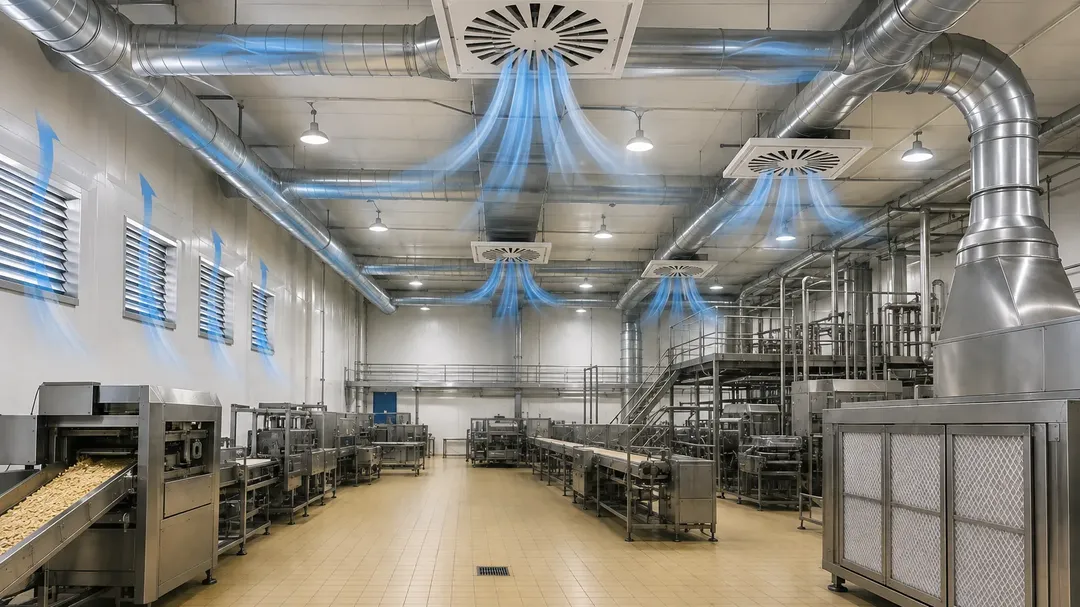
Ventilation design in food processing facilities is paramount for maintaining optimal air quality and hygiene standards. Strategically placed ventilation systems ensure proper air circulation, temperature control, and moisture management throughout the facility. Advanced designs incorporate HEPA filters and air purification systems to remove contaminants and maintain food safety. Effective ventilation design enhances worker comfort and productivity while safeguarding product integrity in food processing environments.
Ventilation is a critical aspect of design in food processing facilities to maintain a safe and hygienic environment. Proper ventilation helps control airborne contaminants, regulate temperature and humidity, and prevent the buildup of odours — three variables that act directly on product quality and shelf life, not just on operator comfort.
Eight factors govern the design. Air quality control removes airborne particles, dust and allergens, with high-efficiency particulate air (HEPA) filters used where necessary to ensure the removal of microscopic contaminants. Temperature and humidity regulation is treated as a product safety control, as both factors can impact the quality and safety of food products. Airflow direction is controlled to prevent cross-contamination between different processing zones, and exhaust systems remove heat, steam, cooking odours and other byproducts generated during food processing. The facility is laid out with clearly defined zones for different processing stages, each with its own ventilation requirements.
The remaining three factors keep the system viable over the life of the plant. Ventilation systems are designed to be energy-efficient, reducing operational costs while maintaining optimal air quality. Emergency ventilation is planned so that air can be quickly evacuated in case of chemical spills, gas leaks or other hazardous situations. A maintenance schedule is set to inspect and clean ventilation components, including ductwork, filters and fans, to ensure optimal performance.
HVAC stands for Heating, Ventilation, and Air Conditioning — a system combining the three functions to provide a comfortable indoor environment in buildings such as homes, offices and industrial facilities. Heating maintains a comfortable indoor temperature, especially during colder seasons; ventilation exchanges indoor and outdoor air to maintain air quality and remove pollutants, odours and excess moisture; air conditioning cools indoor spaces during hot weather; and refrigerant, used in the cooling process, absorbs and releases heat to facilitate the cooling cycle in air conditioners and heat pumps.