
Sieving systems
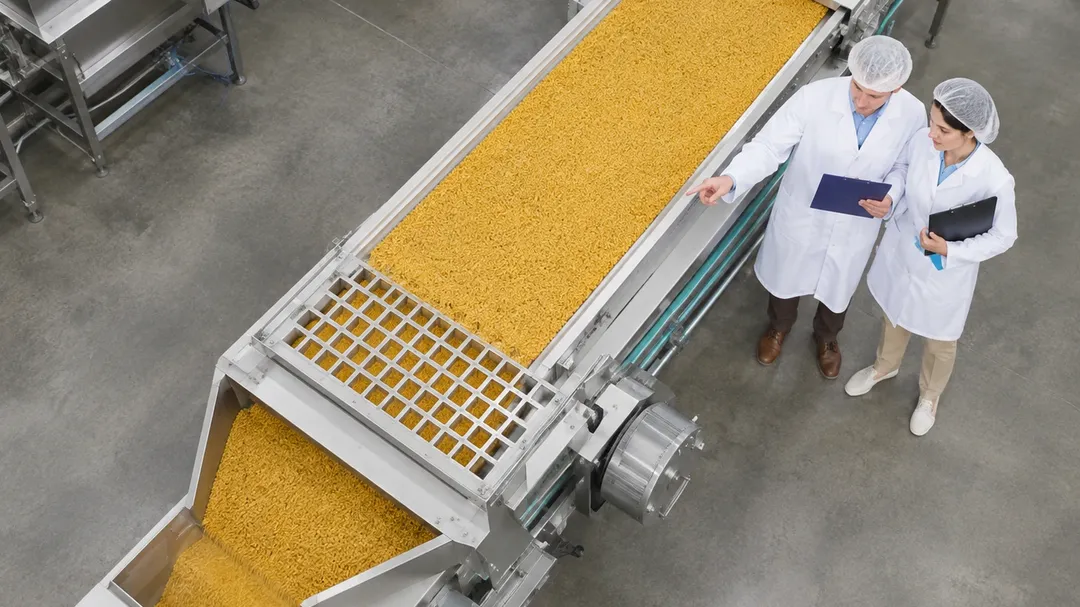
Sieving systems play a critical role in food processing, employing various techniques to separate particles based on size and texture. These systems consist of vibrating screens or rotary sifters equipped with mesh screens of different pore sizes. Advanced designs incorporate adjustable settings for precise particle separation, ensuring product quality and consistency. Sieving systems are integral in refining raw materials and removing impurities to meet stringent food safety standards.
A sieving system is equipment used to separate particles or impurities of different sizes from a mixture of solids or liquids. It typically consists of a vibrating or rotating screen, mesh or sieve that allows smaller particles to pass through while retaining larger ones. In food processing, sieving systems remove contaminants, separate different sizes of particles and classify materials according to their size distribution, and they help ensure product quality and consistency by removing foreign matter and improving the appearance and texture of the finished product.
The working sequence is straightforward. Material to be sieved — raw ingredients such as flour, grains or powdered spices, or processed materials like granules and powders — is fed into the system. It is introduced onto the sieve or screen, which vibrates or oscillates so that larger particles are retained on the sieve surface while smaller particles pass through the apertures. As the material moves across the screen, particles separate by size, and the vibration or oscillation prevents clogging and keeps separation efficient. Oversized particles or impurities removed during sieving may be redirected for reprocessing or disposal. Regular cleaning and maintenance are essential to prevent contamination and maintain performance, including removing trapped particles, inspecting screens for damage and lubricating moving parts.
Selection is governed by the separation required. The size and shape of the mesh screen can be varied to achieve different levels of particle separation, multiple screens may be used where a more precise separation by size is needed, and some systems use air or other forces to assist separation. Typical food industry duties include sifting flour, separating grains from the chaff, and removing impurities from raw ingredients such as spices or herbs, along with applications in dairy products, beverages and many other food products. Common materials handled include flour, sugar, spices, grains, nuts, seeds and powders.
The global sieving system market is expected to grow on the back of increasing demand for processed foods and the need for improved food safety standards, together with the growing trend of automation in the food industry, where sieving systems form an important part of automated food processing lines. The market is segmented by type into vibratory sieving systems, rotary sieving systems and others, and by end-use industry, with food and beverages among the segments. Asia-Pacific is expected to be the fastest-growing market due to rising demand for processed foods in the region. Key players include Russell Finex, GEA Group, Bühler AG and Virto Group.