
Make-up equipment for fine pastry products
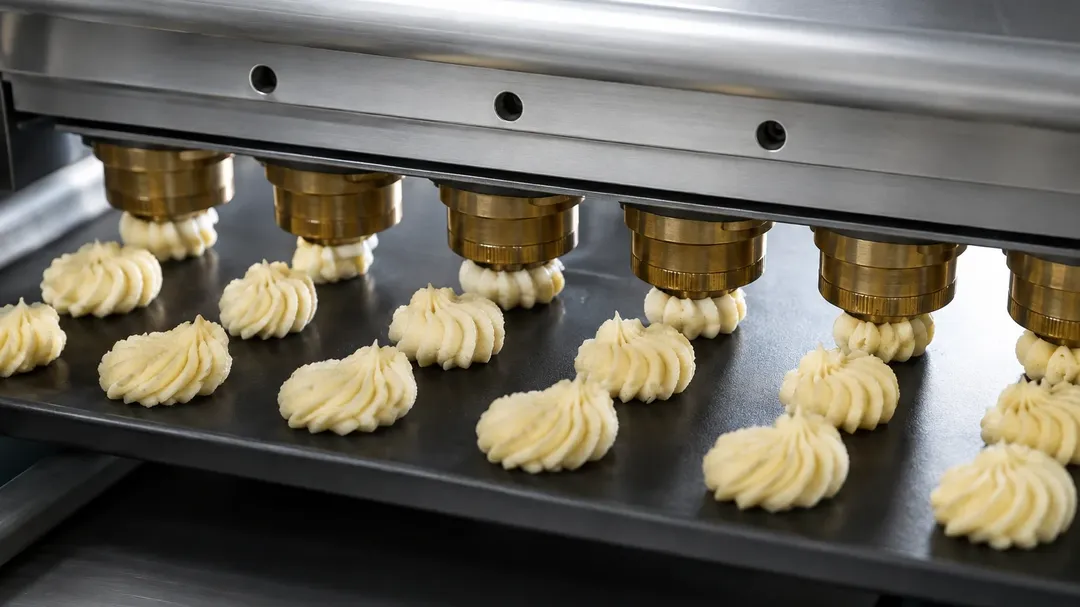
Crafting fine pastry products requires specialized make-up equipment tailored for precise dough handling and shaping. These sophisticated machines, outfitted with adjustable rollers, cutters, and molds, ensure uniformity and consistency throughout the pastry-making process. With advanced designs featuring programmable settings, pastry chefs can customize dough thickness and shaping techniques, optimizing efficiency and quality in the creation of intricate and delectable pastries.
Make-up equipment for fine pastry products refers to the machines and tools used in the production of delicate and intricate pastries such as croissants, Danish pastries, puff pastry, éclairs and macarons. These products demand precise and consistent handling of both dough and filling if the finished pastry is to have the intended texture and appearance, which is why the make-up section is usually the part of the line that determines product quality.
The core equipment set covers five functions. Dough sheeters roll the dough to a specific thickness and shape, which governs the texture and consistency of the final product. Pastry cutters cut the dough into the shapes and sizes required for different pastry types. Filling depositors place chocolate, fruit or cream onto the dough precisely and consistently. Laminators build the layers of dough and butter needed for puff pastry and croissants, which requires precise control of the thickness and temperature of both dough and butter. Moulders shape the dough into forms such as crescents or spirals for croissants and Danish pastries.
A typical production sequence runs through mixing the ingredients into a smooth and elastic dough, resting the dough so the gluten relaxes and it becomes easier to work with, sheeting to a specific thickness, cutting to shape with a manual tool or automated machine, depositing filling where the product requires it, shaping by moulder or by hand, proofing so the shaped dough rests and rises for the desired texture and flakiness, and finally baking at a specific temperature and time depending on the pastry type.
Market growth for this equipment is being driven by changing consumer preferences and demand for high-quality, innovative pastry products; an increasing focus on efficiency and automation to reduce labour costs and improve productivity; technological advances such as multi-functional machines and automated systems; and rising demand for convenience foods driven by urbanisation and busy lifestyles. Europe is expected to be a major growth driver, supported by the strong pastry culture and demand for high-quality pastry in France, Italy and Spain.