
Materials used in food processing
Food processing relies on a diverse range of materials carefully selected for their suitability and safety. Stainless steel, prized for its corrosion resistance and hygienic qualities, is extensively used in equipment fabrication. Food-grade plastics are prevalent for packaging and handling, while rubber compounds find application in sealing and gasketing. Furthermore, food-safe lubricants and coatings are essential to ensure machinery operates smoothly without compromising food safety standards.
Food packaging materials are the substances and compounds used to enclose, protect and preserve food products during storage, transportation and distribution. They are selected on their ability to maintain the quality, safety and freshness of the food while meeting regulatory standards and consumer preferences — and they are carefully regulated so that they do not compromise the quality or integrity of the food products they come into contact with.
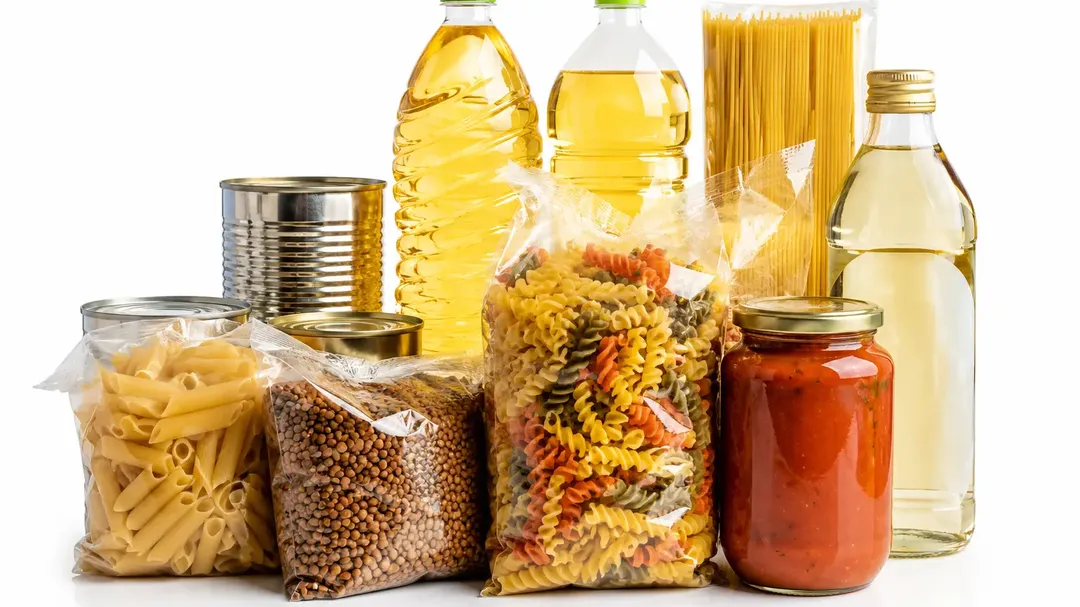
The main material families in use are plastics, valued for versatility, durability and cost-effectiveness, with common types including polyethylene (PE), polypropylene (PP), polyethylene terephthalate (PET) and polystyrene (PS); paper and cardboard for dry goods, cereals and beverages, which can be coated or laminated for added strength and moisture resistance; metal, where aluminum and steel serve cans, trays and foil packaging and give excellent barrier properties against light, oxygen and moisture; and glass for beverages, sauces and preserved foods, providing an inert and transparent barrier that preserves flavour and product integrity.
Alongside these sit biodegradable materials such as compostable plastics, paper-based packaging and biodegradable films, growing in use because of environmental concerns; composite materials that combine layers — for example paperboard with plastic or aluminum — to deliver barrier protection, strength and flexibility together; flexible packaging in the form of plastic films, laminates and pouches, offering lightweight, cost-effective and customizable solutions; foams such as expanded polystyrene (EPS) for protective packaging and insulation; natural fibres including bamboo, sugarcane and palm leaves for eco-friendly packaging; and specialty films and coatings for microwaveable packaging, vacuum packaging and modified atmosphere packaging (MAP) to extend shelf life and preserve freshness.
The material choice follows the job the pack has to do. Packaging protects food from damage, contamination and spoilage; preserves it by creating barriers against deterioration; adds convenience through portion control, easy opening and resealing; carries information on ingredients, nutritional facts and expiration dates; supports marketing through design and branding; enables efficient distribution with minimum damage; ensures compliance with safety standards to prevent hazards; and contributes to waste reduction by promoting recyclability and eco-friendly materials.