
Equipment for processing of plant and alternative protein sources
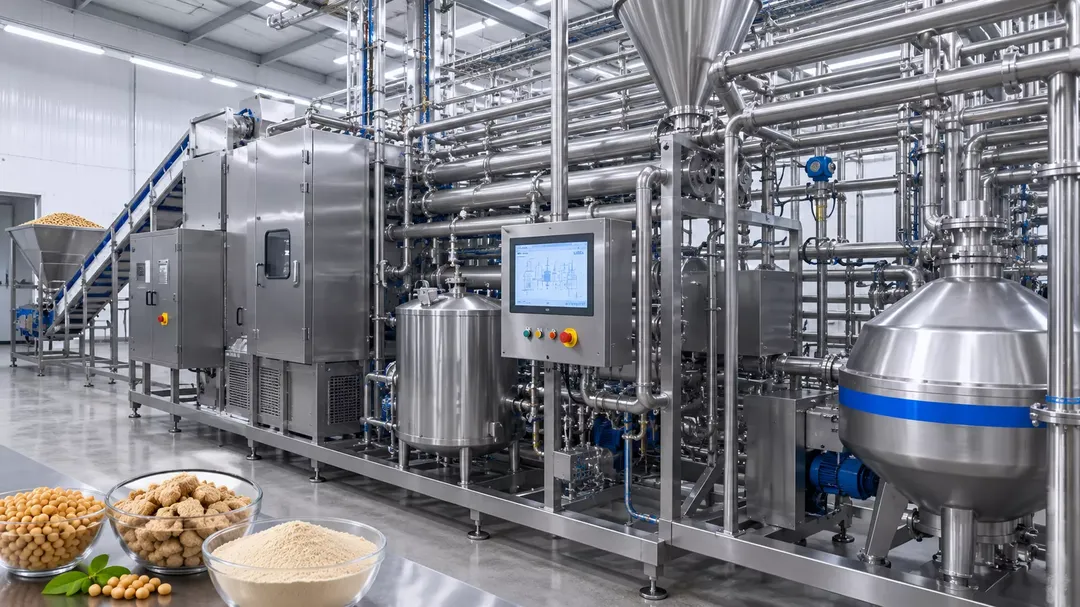
Processing equipment for plant and alternative protein sources encompasses specialized machinery designed for efficient extraction, separation, and refinement of proteins. This includes solvent extraction systems, membrane filtration units, and chromatography columns, each optimized for specific protein fractions. Advanced techniques such as ultrafiltration and ion exchange enable precise purification, while continuous processing systems ensure high throughput and consistency.
Plant protein and alternative protein processing lines are assembled around a handful of core machines, each doing a distinct job. Extruders handle soy, pea and rice protein, heating and pressurising a mixture of protein, starch and other ingredients so it can be formed into a variety of shapes and textures. Blenders and mixers homogenise ingredients for plant-based protein powders and blends. Separators and filters split solid and liquid components in the production of extracts and concentrates, while centrifuges separate protein from fibres and carbohydrates during purification. Fermenters culture microorganisms such as yeast or bacteria to produce microbial and fungal proteins that are then harvested and purified, and homogenizers break protein down into smaller particles to improve solubility and emulsification.
The equipment selection varies with the specific plant or alternative protein being processed and with the desired end product. Plant-based meat substitutes such as burgers, sausages and nuggets from soy, wheat, peas and mushrooms rely on extruders, mixers and blenders. Nut and seed milks including almond and cashew use nut milk bags, blenders and strainers. Tofu and tempeh use soy milk makers, tofu presses and incubators. Protein powders from pea, rice and hemp use blenders, mixers and sifters; protein bars from nuts, seeds and plant-based protein powders use mixers, blenders and presses; and plant-based cheeses from nuts, seeds and tofu use blenders, mixers and fermentation chambers.
The underlying unit operations are consistent across these product families: grinding and milling with grinders or mills using blades or burrs to reduce ingredients to a fine powder; mixing and blending to create a homogeneous mixture; extrusion, in which a mixture is forced through a die to create a specific shape or texture, used for meat substitutes as well as snacks and cereals; fermentation, used in plant-based cheeses and yogurts; drying with dehydrators or ovens to remove moisture; and pressing to remove excess moisture or shape ingredients, common in tofu and tempeh production.
Demand for this equipment is expected to grow significantly. According to a report by Meticulous Research, the global plant-based protein market is expected to grow at a CAGR of 8.1% from 2021 to 2028, keeping extruders, mixers and blenders for plant-based meat substitutes in high demand. Key players in the equipment market include GEA Group AG, Alfa Laval AB and Bühler Group.