
Frozen Baguettes
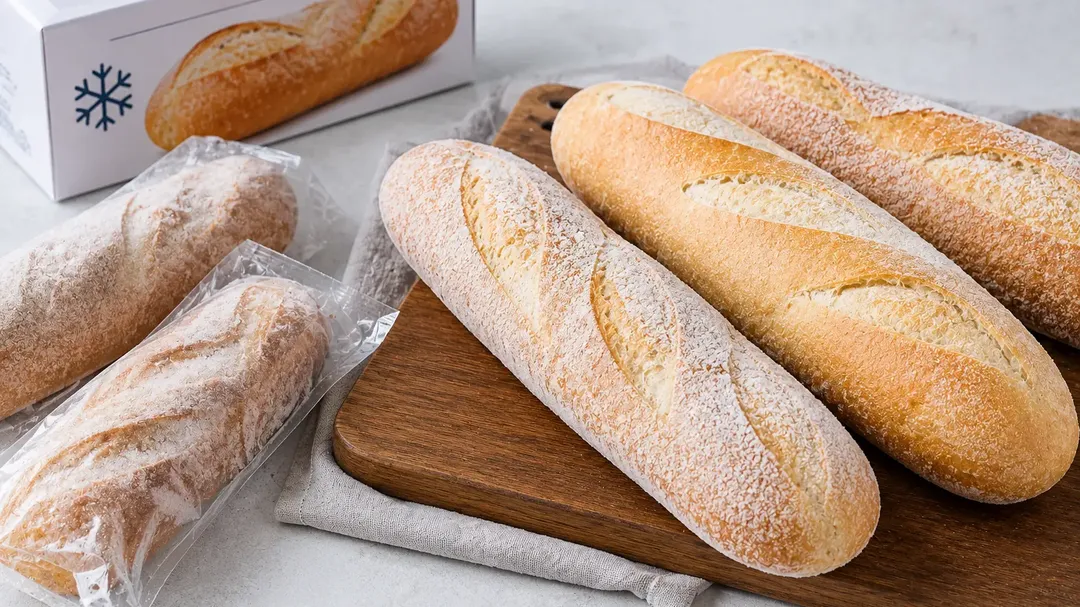
Employing advanced preservation techniques, frozen baguettes undergo meticulous processing to uphold their quality. After baking to perfection, rapid freezing at temperatures below -18°C halts microbial activity while maintaining texture. Vacuum sealing prevents moisture loss and freezer burn, ensuring product integrity. Advanced baking methods and formulations guarantee optimal taste, texture, and aroma, offering consumers a delectable option.
Frozen baguettes are bread products that have been partially or fully baked, then frozen for preservation and later use. Baguettes are a type of French bread that is typically long and thin, with a crispy crust and a soft, chewy interior. Freezing lets the product be stored for an extended period and reheated when needed, which is why frozen baguettes are a convenient option for both consumers and food service establishments.
Commercial production runs as a continuous sequence. Baguette dough ingredients — flour, water, yeast and salt — are mixed using large mixers. The dough is then shaped into the classic elongated baguette form using automated shaping machines, and the shaped baguettes are placed in a warm, humid environment to rise and ferment during proofing. Baking follows in large ovens at high temperatures.
After baking, the baguettes are cooled on racks or conveyor belts to prevent them from becoming soggy, then placed in a freezer, either individually or in bulk, to be frozen. Each of these stages — mixer sizing, shaping line, proofer environment, oven, cooling area and freezer — has to be laid out and balanced as one line if the plant is to hold crust quality and throughput together.
Major players in the frozen baguette market include Aryzta AG, Bridor SAS, Europastry S.A., Flowers Foods Inc., Grupo Bimbo S.A.B. de C.V., Lantmännen Unibake International and Nestlé SA.