
Frozen poultry
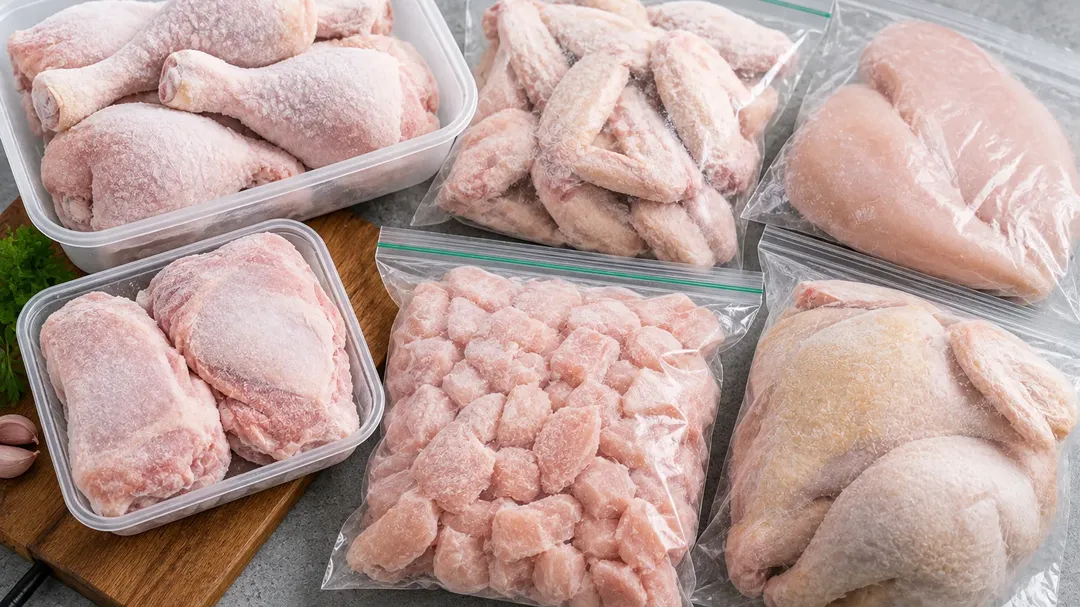
Frozen poultry preservation involves meticulous processing steps. Following thorough cleaning and processing, poultry is rapidly frozen using cryogenic techniques to temperatures below -18°C, effectively halting microbial proliferation and enzymatic degradation. Vacuum sealing in impermeable packaging prevents moisture loss and oxidative spoilage. These precise methods ensure that frozen poultry maintains its texture, flavor, and nutritional content, meeting strict industry standards for quality and safety.https://www.pmg.engineering/
Frozen poultry refers to any type of poultry — including chicken, turkey, duck and other birds — that has been frozen to preserve its quality and extend its shelf life. It reaches the market in several forms: whole birds, cut-up pieces, ground meat, and value-added products such as breaded chicken nuggets or turkey burgers. For a processor, the form of the finished product largely dictates the layout of the line, the freezing method and the packaging format that follows it.
Commercial production begins with raising chickens, turkeys or other birds until they are ready for processing. The meat is then blast-frozen or individually quick-frozen (IQF) to freeze it quickly and lock in its freshness. Freezing speed is the step that carries the most weight for finished quality, and IQF in particular suits cut-up pieces and portioned products that must remain free-flowing.
Frozen product is then packaged in airtight containers or vacuum-sealed packaging, which helps prevent freezer burn and maintains the quality of the meat through storage and transportation. From there it is distributed to retail stores, supermarkets, restaurants and other customers around the world, where it is finally prepared by grilling, roasting, frying or baking.
The global frozen poultry market is served by major players including Tyson Foods, JBS S.A., Cargill, BRF S.A. and Sanderson Farm.