
Frozen herbs
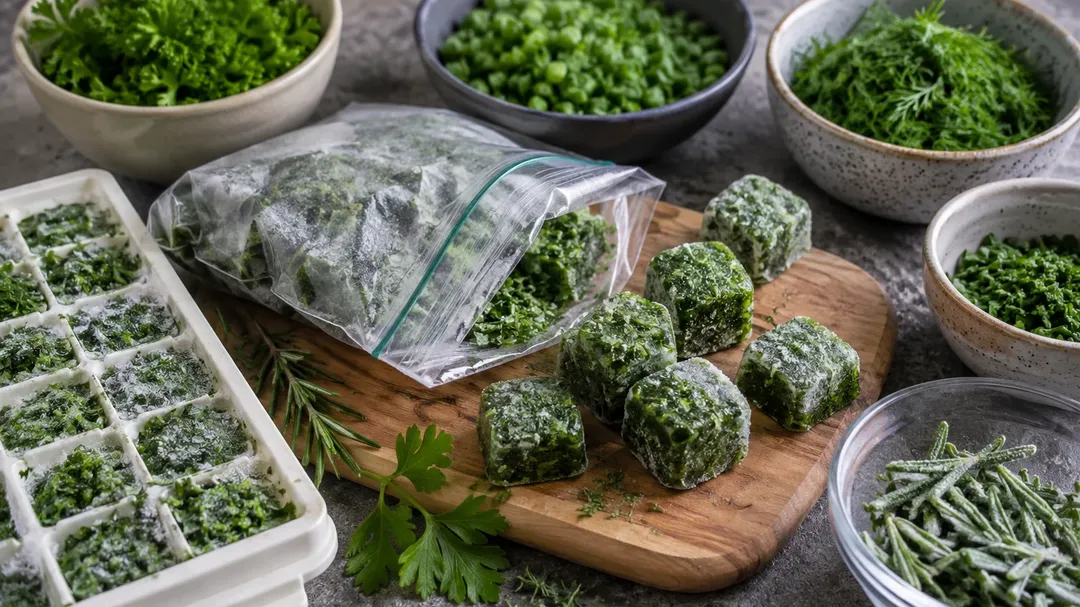
Frozen herbs are subjected to a stringent preservation process to retain their sensory attributes. Following harvest, herbs are promptly washed, diced, and rapidly frozen to inhibit enzymatic deterioration. Swift freezing minimizes ice crystal formation, preserving cell integrity and flavor compounds. Vacuum sealing in impermeable packaging prevents oxidation and maintains herb quality. This meticulous technique ensures frozen herbs retain their aroma, taste, and nutritional value.https://www.pmg.engineering/
Frozen herbs are herbs that have been cleaned, chopped and frozen for preservation purposes. Herbs are typically used to add flavour, aroma and nutritional value to various dishes, and freezing gives food manufacturers and kitchens a convenient, practical way to use them in cooking without the shelf-life limits of fresh material.
Commercial production follows four stages. Herbs are cultivated in open fields or greenhouses, depending on the type of herb and the local climate. They are harvested when they reach maturity, which varies depending on the type of herb. The harvested crop is then washed, trimmed and sorted to remove any impurities such as dirt, debris or damaged leaves. Finally, the prepared herbs are frozen using either blast freezing or quick-freezing techniques to preserve their flavour and nutrients.
Commercially, frozen herbs remain a niche. The market scope is relatively small compared to other frozen food categories such as vegetables, fruits and meat products. North America and Europe are the largest markets, accounting for a significant portion of global demand, and major players operating in the industry include Givaudan, McCormick & Company, Inc., Kerry Group and Naturex SA.