
Grinding, sifting and sieving plants for machines for milling
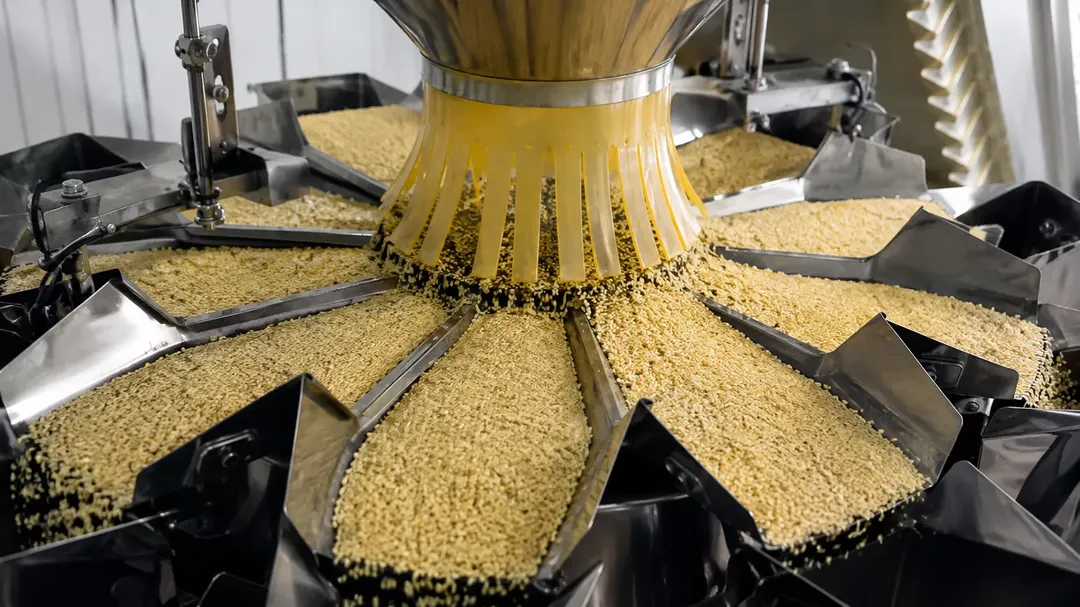
Machines known as grinding, sifting, and sieving plants play a crucial role in the milling process of grains and various food items. They find application predominantly in commercial or industrial environments where there's a requirement to mill and process substantial volumes of grains efficiently.
Grinding, sifting and sieving plants are the core machinery of a milling line, used to mill and process grains and other food products in commercial and industrial settings where large quantities have to be handled efficiently. Grinding machines crush and break grain into smaller particles using mechanisms such as rollers or grinding plates. Sifting machines separate the ground grain into different sizes using screens or mesh, with smaller particles passing through and larger particles retained. Sieving machines work in a similar way but are aimed at removing impurities such as debris or stones from the milled grain.
Together these machines form a complete milling system. The working sequence runs in three stages. Grinding reduces the raw material to a fine powder or granular form, typically on a roller mill, hammer mill or pin mill, and can be adjusted to produce different textures and particle sizes depending on the final product. Sifting then separates the different grades of flour or meal using a combination of sieves and air currents, which also help remove impurities and foreign material. Sieving is the final refining stage, usually on a vibrating sieve or screen, separating the product into grades by particle size and removing any remaining impurities.
The output range is broad: flour for bread, cakes and pastries; cereals from corn, wheat, oats and barley; animal feed for livestock such as cows, pigs and chickens; wheat flour for pasta such as spaghetti and macaroni; and snacks such as crackers and chips, where grain is ground to a fine powder and mixed with water and other ingredients. The quality and characteristics of the final product depend on the type of raw material, the milling equipment selected and the milling process employed — which is why equipment selection is a process decision, not a purchasing one.
Demand for these plants is driven by the growth of the food and beverage industry, the need for higher-quality products and the push for automation in manufacturing. Advanced technologies such as computerised systems and sensors are being adopted to improve process efficiency and accuracy, and buyers increasingly want flexible, versatile plants able to handle a wide range of materials and processing requirements. Sustainability is a further influence, with manufacturers seeking more energy-efficient, lower-waste solutions that still deliver high-quality product.