
Potato crisp production plants
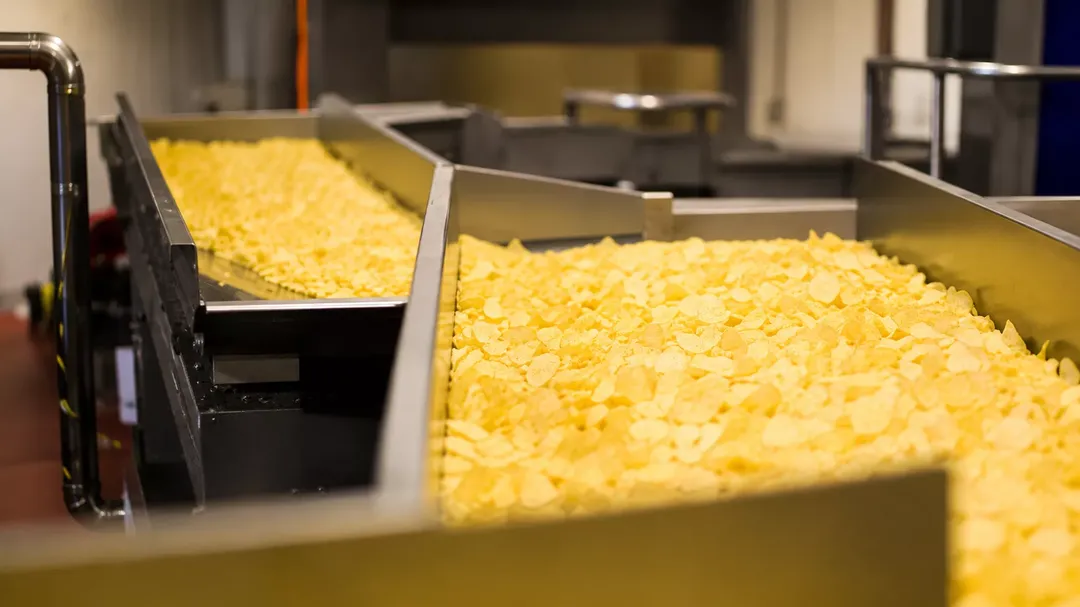
Potato crisp production plants utilize cutting-edge technology to transform fresh potatoes into crispy snacks. From washing and peeling to slicing and frying, each step is meticulously controlled to ensure quality and consistency. These facilities prioritize food safety and hygiene standards, employing stringent measures to deliver delicious and satisfying potato crisps to consumers worldwide, meeting the demands of a growing snack industry.
Potato crisp production plants are factories that manufacture potato chips, also known as potato crisps, on a large scale, using specialised equipment and processing lines designed to slice, fry and season potatoes into crispy, flavourful chips. The production sequence begins with selecting high-quality potatoes, washing and peeling them, slicing them into thin, even slices, and frying them in oil until they are crispy and golden brown. The chips are then seasoned with flavours such as salt, barbecue, sour cream and onion, and packaged for distribution and sale.
The main raw material is potatoes, usually sourced from farms or potato suppliers, with oil, seasoning and preservatives as the other inputs. The core equipment set runs in order: a potato washing and peeling machine to remove dirt and debris from the surface; a slicing machine whose slice thickness can be adjusted to suit the desired texture and crispiness; a blancher that treats the slices in hot water or steam to remove excess starch and ensure even cooking during frying; a fryer that cooks the blanched slices in oil at high temperatures; a seasoning machine that applies flavours as powder, liquid or spray; and a packaging machine that fills, weighs, seals and labels the bags or containers.
Around this line sit conveyors, elevators, mixers and quality control systems that keep the chips moving and confirm they meet the required quality standards. The precise equipment selected for any given plant depends on the scale of production, the desired product specifications and other factors specific to that plant, which is why crisp lines are rarely identical from one factory to the next.
Packaging formats vary with the plant and the market it serves. Crisps are commonly packed in bags of paper, plastic or foil, sealed with heat or adhesive to hold freshness and keep moisture out; in cardboard boxes that protect the chips during shipping and storage; in cylindrical metal or plastic canisters, often resealable, to keep the chips fresh; and in individual portion packs suited to on-the-go snacking or vending machines. Equipment and complete lines for this sector are supplied by manufacturers including Heat and Control, Inc., Kiremko B.V., TOMRA Sorting Food, GEA Group and Bühler AG, who offer complete production lines, individual machines and custom solutions tailored to specific plant requirements.