
Drying and cooling plants
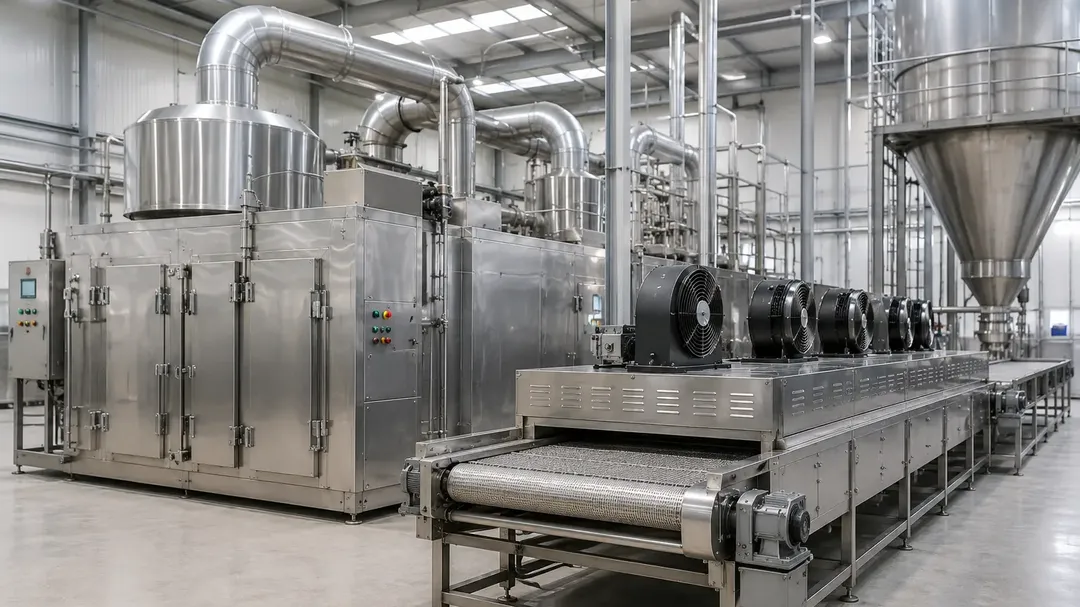
Drying and cooling plants utilize innovative technologies to efficiently remove moisture and reduce temperatures in various industrial processes. These plants employ methods such as air drying, evaporation, and refrigeration to achieve optimal conditions for product preservation and quality. Through precise control systems and advanced equipment, they enhance production efficiency while minimizing energy consumption, contributing to sustainable manufacturing practices.
Drying and cooling plants are industrial facilities used in the food processing industry to dry and cool a variety of food products. They combine heat, airflow and, in some cases, moisture control to remove excess moisture from the product and bring it down to a temperature suitable for storage or further processing. For perishable products and those with high water content, this step is what protects quality and extends shelf life.
The products handled span fruits and vegetables (dried fruits such as raisins, apricots and cranberries, and dried vegetables such as tomatoes and peppers), grains and nuts (rice, wheat, corn and almonds), meat and poultry cooled and dried after processing to remove excess moisture and prevent bacterial growth, dairy products such as milk, cheese and yogurt, and snack foods such as potato chips, popcorn and pretzels where drying and cooling improve texture and shelf life.
Design and component selection vary with the product and the requirements of the processing operation. Common elements include conveyor systems, dryers, coolers, air filtration systems and control systems. A conveyor typically moves product through the plant while successive stages of drying and cooling are achieved by different equipment: some plants use heated air, others use a vacuum to remove moisture, and many combine technologies to reach the target moisture and temperature. The control system is equally essential, regulating temperature, humidity and airflow through sensors, monitoring systems and automated controls so that processing conditions stay consistent and optimal.
The global drying and cooling equipment market was valued at USD 2.71 billion in 2020 and is projected to reach USD 3.80 billion by 2027, growing at a CAGR of 4.8% from 2021 to 2027, driven by increasing demand for processed food products, rising environmental concerns and advances in drying and cooling technology. Current technology trends include hybrid dryers combining air, vacuum and infrared drying, heat pumps for energy-efficient drying, and the integration of smart sensors and control systems for process optimisation. Major players in the equipment market include GEA Group, Bühler AG, ANDRITZ AG, ThyssenKrupp AG, Carrier Vibrating Equipment, Inc. and Comessa.