
Why HACCP Success Depends on Hygienic Factory Design
Effective HACCP starts with a hygienic factory design that reduces contamination risks, supports cleaning, and keeps food production areas safe and controlled.
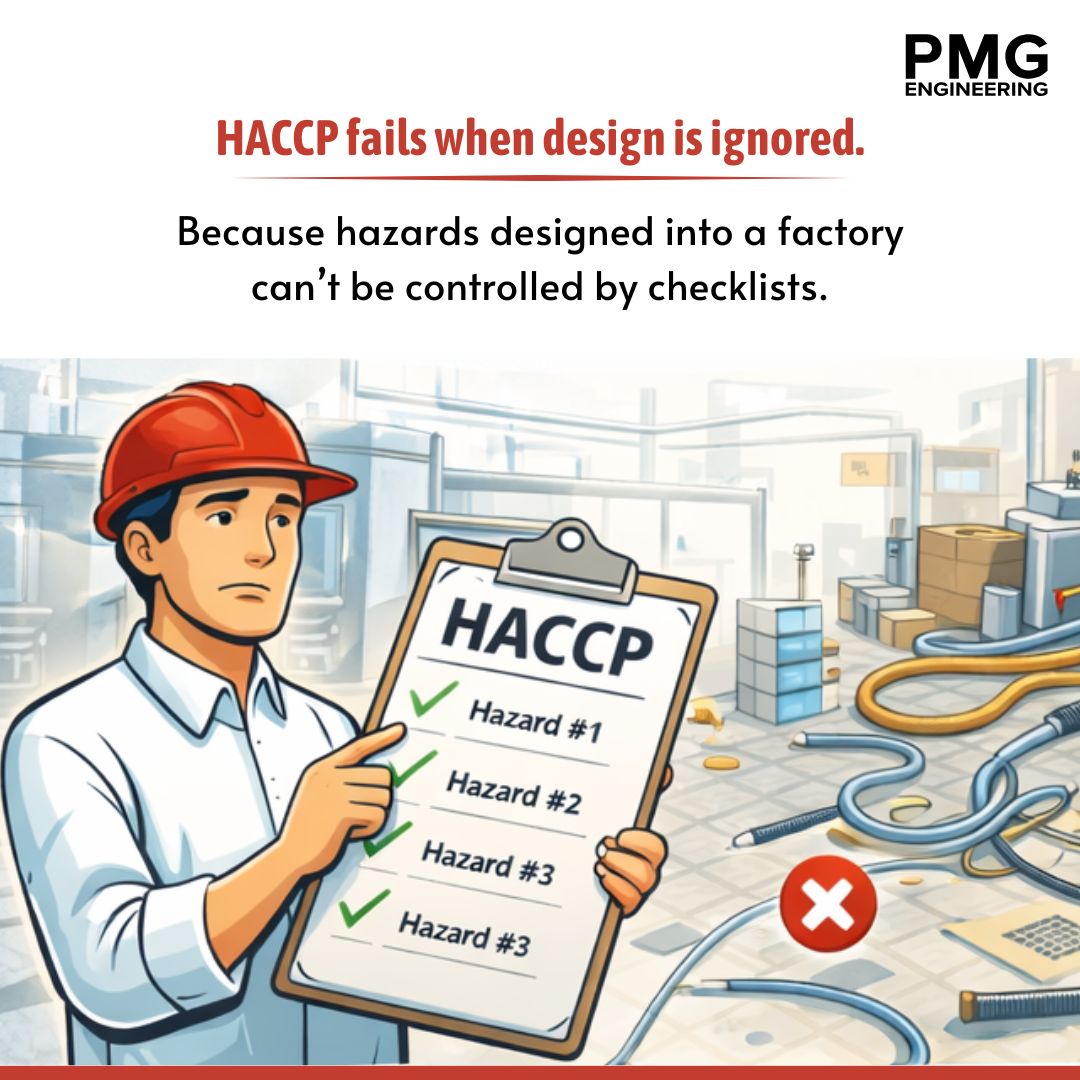
HACCP fails when design is ignored. A hazard analysis is only as good as the factory it is applied to: if the building, the layout and the equipment create hazards, no amount of documentation will remove them. Hazards designed into a factory can't be controlled by checklists.
This matters because a HACCP study can look complete on paper — every hazard identified, every line ticked — while the plant floor still carries the conditions that cause contamination. Cluttered process areas, hoses and services left across the floor, and layouts that force product, people and waste through the same space are design outcomes, not paperwork failures. They cannot be signed away.
The practical conclusion for a plant owner is that food safety has to be built in at the design stage, when layout, flows, drainage, surfaces, services routing and equipment selection are still decisions rather than fixed constraints. HACCP then does the job it was meant to do — monitoring and verifying control at the critical points — instead of trying to compensate for a factory that works against it.