
Why Smart Factory Design Matters More Than Automation
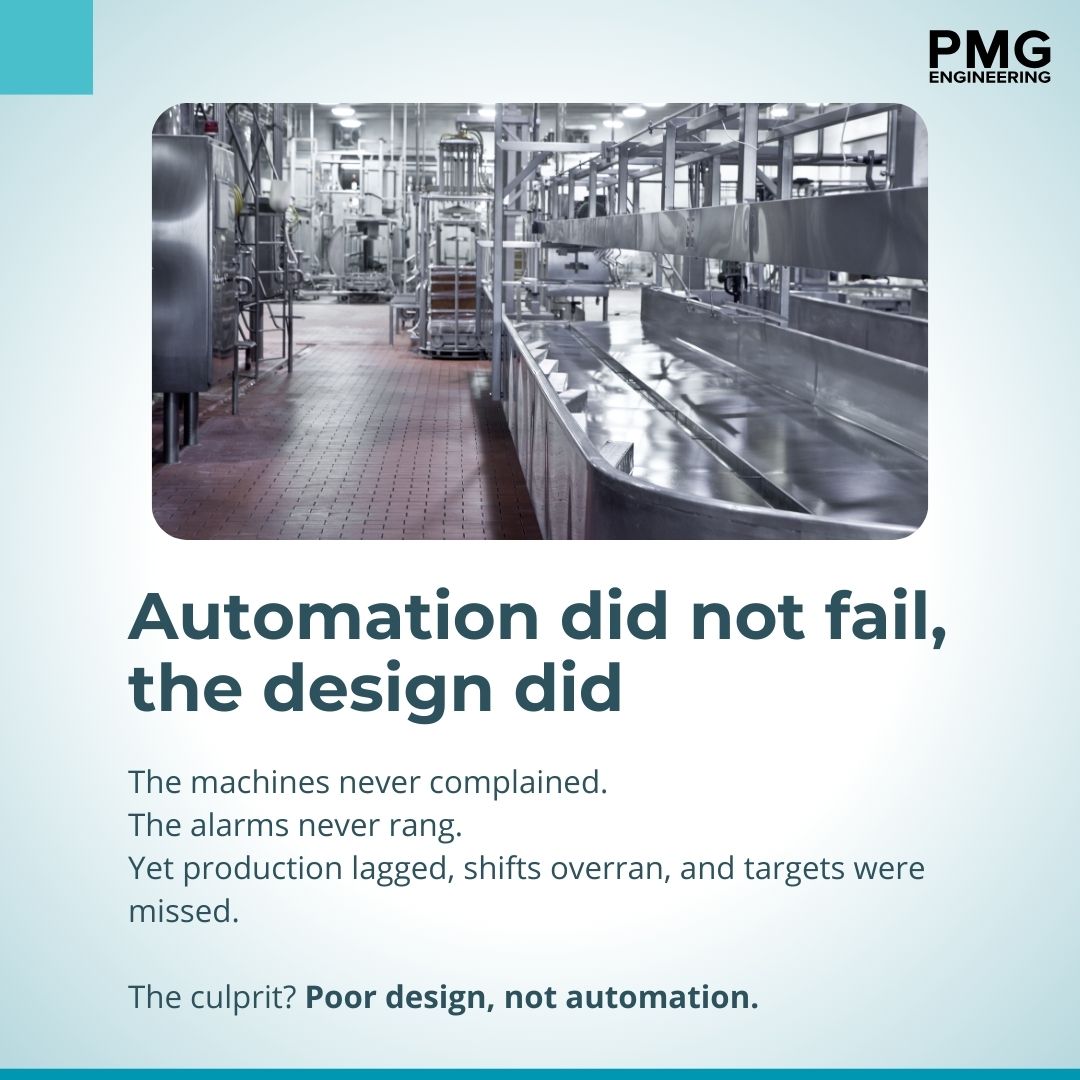
Automation works best when the factory is designed around it. A smart factory design improves workflow, hygiene, safety, flexibility, and overall efficiency before automation is added.
Automation did not fail, the design did. In many food and beverage plants the equipment runs exactly as specified — the machines never complain, the alarms never ring — and yet production lags, shifts overrun and targets are missed. Nothing on the control panel explains it.
The culprit is poor design, not automation. When the layout, the sequence of operations and the way material and people move through the plant are not thought through, no amount of instrumentation will recover the lost hours. Automation only executes the design it is given; if that design carries the delay, the delay becomes permanent.
That is why smart factory design matters more than automation. The questions worth asking before the first PLC is specified are about how the factory is meant to flow, not about how many functions can be automated.