
HOME / INFO-GRAPHICS / OPTIMAL ENGINEERING DESIGN: BALANCING COMPLEXITY, EFFORT, AND PERFORMANCE
Optimal Engineering Design: Balancing Complexity, Effort, and Performance
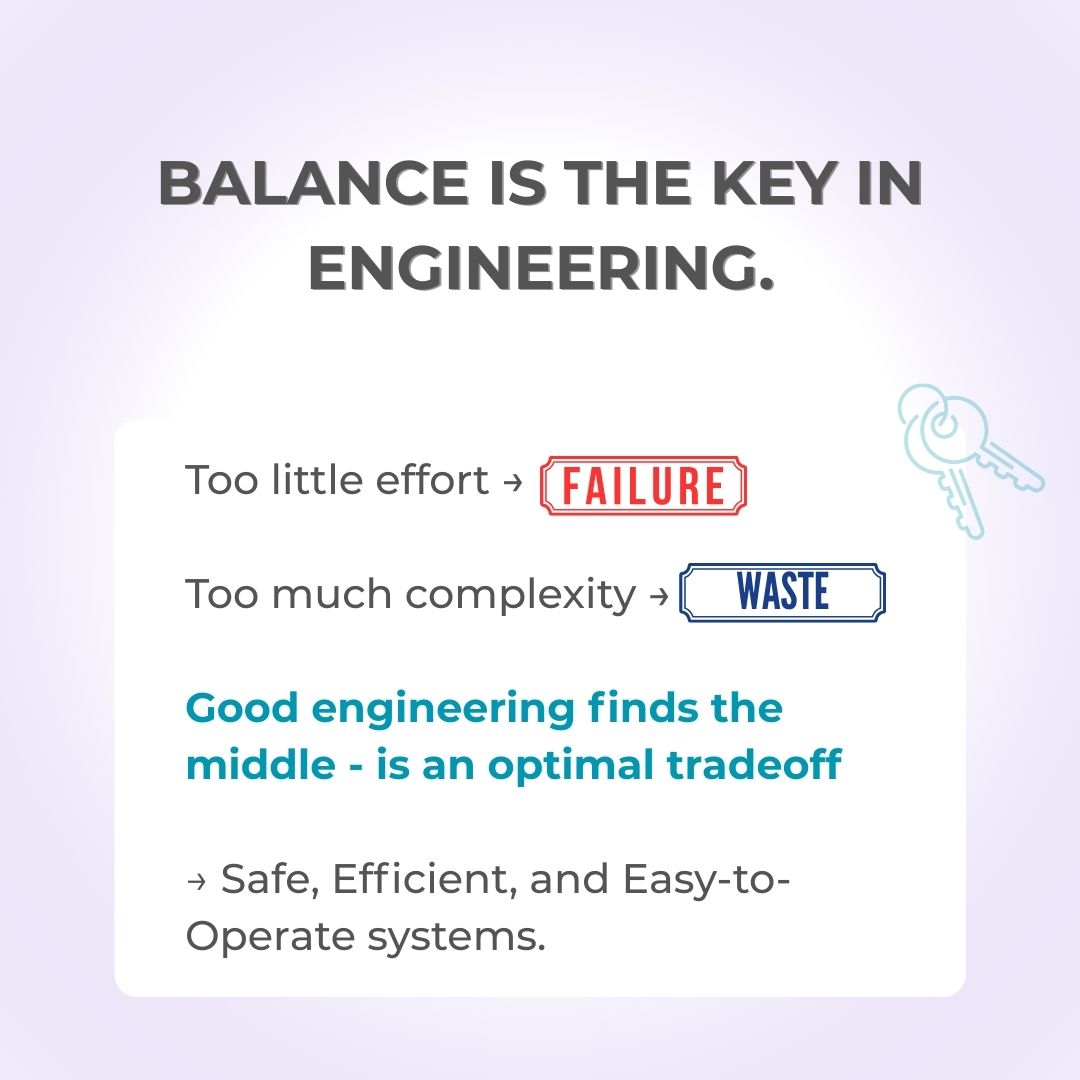
Good engineering design balances complexity, effort, cost, and performance to create practical solutions that are efficient, reliable, and easier to operate and maintain.
Balance is the key in engineering. Too little effort leads to failure; too much complexity leads to waste. Both extremes cost a food and beverage plant money — one in systems that do not perform, the other in capital and operating burden that never earns its keep.
Good engineering finds the middle. It is an optimal tradeoff: enough design effort to make the system reliable, without layering on complexity that adds nothing a plant owner can use.
The outcome of that tradeoff is what matters on the factory floor — safe, efficient, and easy-to-operate systems.
DOWNLOAD
Download / View →