
Frozen Sushi
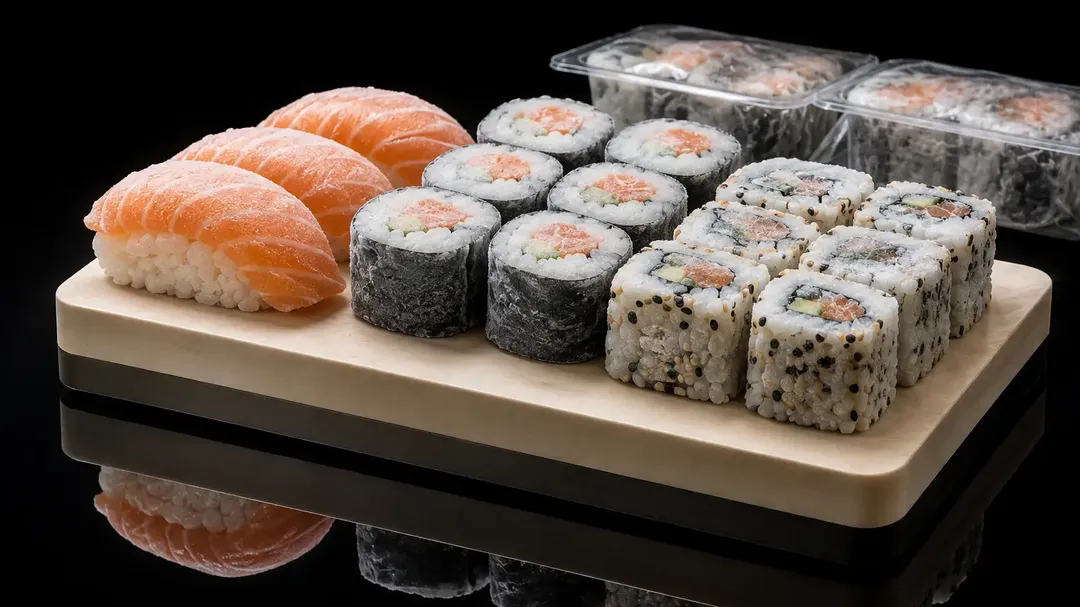
Employing advanced preservation methods, frozen sushi undergoes meticulous processing to ensure its quality and safety. After preparation, it is promptly frozen to temperatures below -18°C, halting microbial growth and preserving its delicate texture. Vacuum sealing prevents moisture loss and freezer burn, maintaining product integrity. Innovative freezing techniques minimize ice crystal formation, ensuring that frozen sushi retains its authentic taste, texture, and nutritional value.
Frozen sushi is pre-made sushi that has been frozen so it can be held for an extended period before being thawed and consumed. Sushi itself is a traditional Japanese dish built from vinegared rice, seafood or vegetables, and sometimes other ingredients such as avocado or egg, rolled in sheets of dried seaweed called nori. In frozen form it reaches consumers through grocery stores and supermarkets in a variety of types and flavours, and it can equally be made at home from scratch rather than eaten at a restaurant.
Commercial production follows four defined stages. Ingredients — fish, vegetables and rice — are carefully selected and prepared according to established food safety guidelines. The prepared components are placed on a sheet of nori along with rice and other seasonings and rolled into sushi rolls of various sizes and shapes. The made rolls are then frozen immediately to preserve their freshness and quality, and finally packaged in airtight bags or containers to protect the product from freezer burn and other contaminants.
For a processor, the sequence is what governs plant layout: raw material handling and preparation with food safety controls, a rolling and forming area, a freezing step placed immediately downstream of rolling so there is no delay between forming and freezing, and an airtight packaging line. Major players active in the frozen sushi market include Ajinomoto Co., Inc., California Sushi Rolls, Inc., Gorton's Seafood, Kanegrade Ltd., Katokichi Co., Ltd. and Nishimoto Co., Ltd.