
Frozen cakes
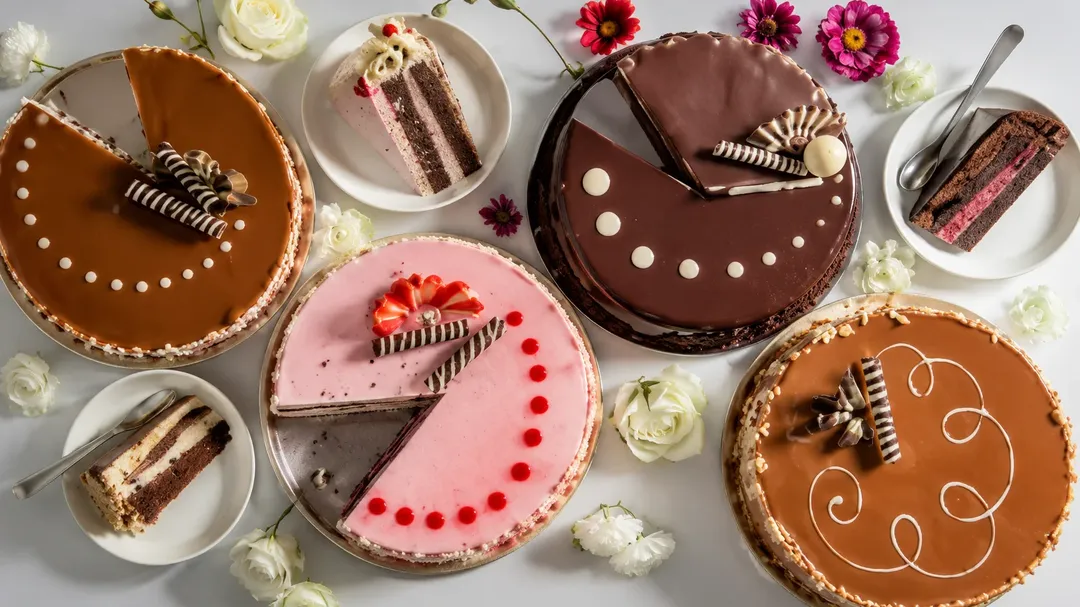
Frozen cakes undergo stringent preparation methods before rapid freezing below -18°C to halt microbial growth and maintain texture. Vacuum sealing prevents moisture loss and freezer burn, preserving product quality. Advanced freezing techniques minimize ice crystal formation, ensuring cake texture remains unchanged. These precise procedures guarantee retained taste, texture, and quality, providing consumers with convenient and indulgent dessert options.
Frozen cake is cake that is stored and served at a very low temperature, typically below freezing point. It is made by layering sponge cake or other types of cake with various fillings and toppings, and then freezing the entire cake until it is firm. Because the product is made in advance and held in a freezer until it is needed, it is a convenient option for events and gatherings. Cakes are decorated with a variety of frostings and toppings, and can be served in individual slices or as a whole cake.
Commercial production follows five stages. Ingredients are mixed and the batter is poured into cake pans, which are then baked in ovens. The baked cakes are removed from the oven and allowed to cool — an important step, as it allows the cakes to firm up and become more stable. The cooled cakes are decorated, which may involve adding frosting, whipped cream, fruit or other toppings.
The decorated cakes are then frozen to preserve their freshness and quality. They are typically flash-frozen, which involves placing them in a very cold environment for a short period to freeze them quickly. Finally, the product is packaged for sale, either as wrapped individual slices or as entire cakes in boxes or other containers.
Major players in the frozen cake market include Sara Lee Frozen Bakery, Rich Products Corporation, General Mills, Inc., Pepperidge Farm and Tastykake.