
Frozen tarts
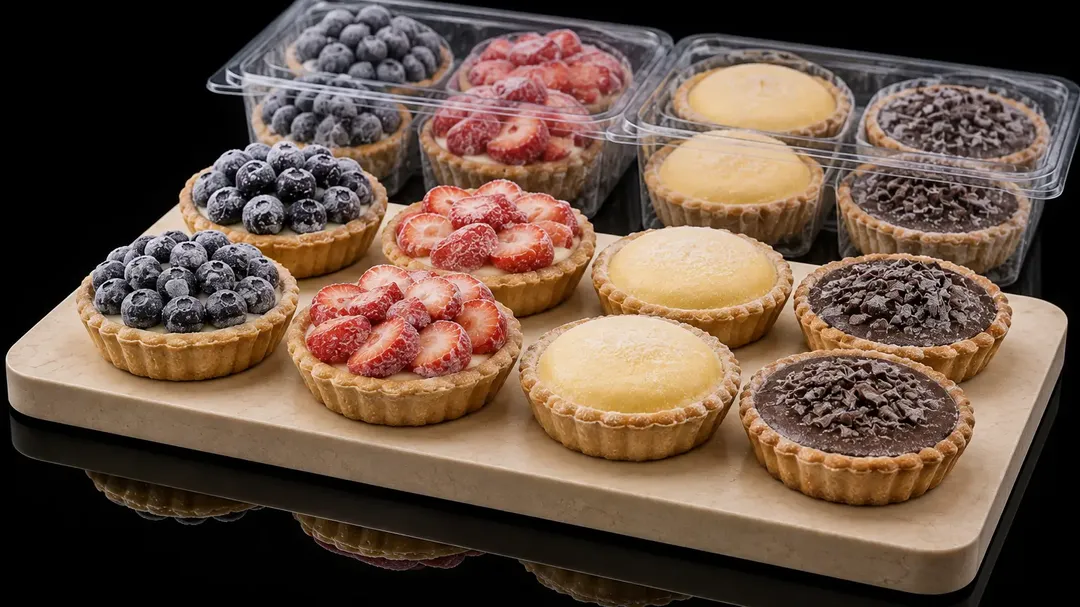
Frozen tarts undergo precise preparation and rapid freezing below -18°C, arresting microbial activity and preserving texture. Vacuum sealing prevents moisture loss and freezer burn, ensuring product integrity. Advanced freezing methods minimize ice crystal formation, maintaining tart texture. These meticulous procedures safeguard taste, texture, and quality, offering consumers convenient and appetizing options with extended shelf life.
Frozen tarts are a pastry product filled with sweet or savoury ingredients and frozen for later consumption. The tart shell is made from pastry dough — either a shortcrust pastry or a puff pastry — while the filling can be built from fruits, nuts, chocolate, custard, cheese, vegetables or meats, depending on whether the tart is sweet or savoury. Because the shell and the filling behave very differently through forming, filling and freezing, the product sits at the intersection of bakery and frozen food processing.
Commercially, frozen tarts are sold pre-made and frozen, and are reheated quickly in an oven or microwave for a meal or snack. They are produced in a variety of flavours and sizes, from bite-sized mini tarts to larger, family-sized tarts, which has direct implications for tooling, tray and mould sizing, freezing load and pack format on a production line. They are also a popular item in the food service industry, where they are served as a dessert or snack in restaurants, cafes and other food establishments.
The market scope for frozen tarts is relatively small compared with other frozen food products, but it remains a significant and growing segment of the frozen food market. Major players include Nestle SA, Dr. Oetker, Jus-Rol, La Rose Noire, Trader Joe's, Schwan's Company and McCain Foods Limited.