
Project Started Without Approvals? Why Systematic Engineering Matters
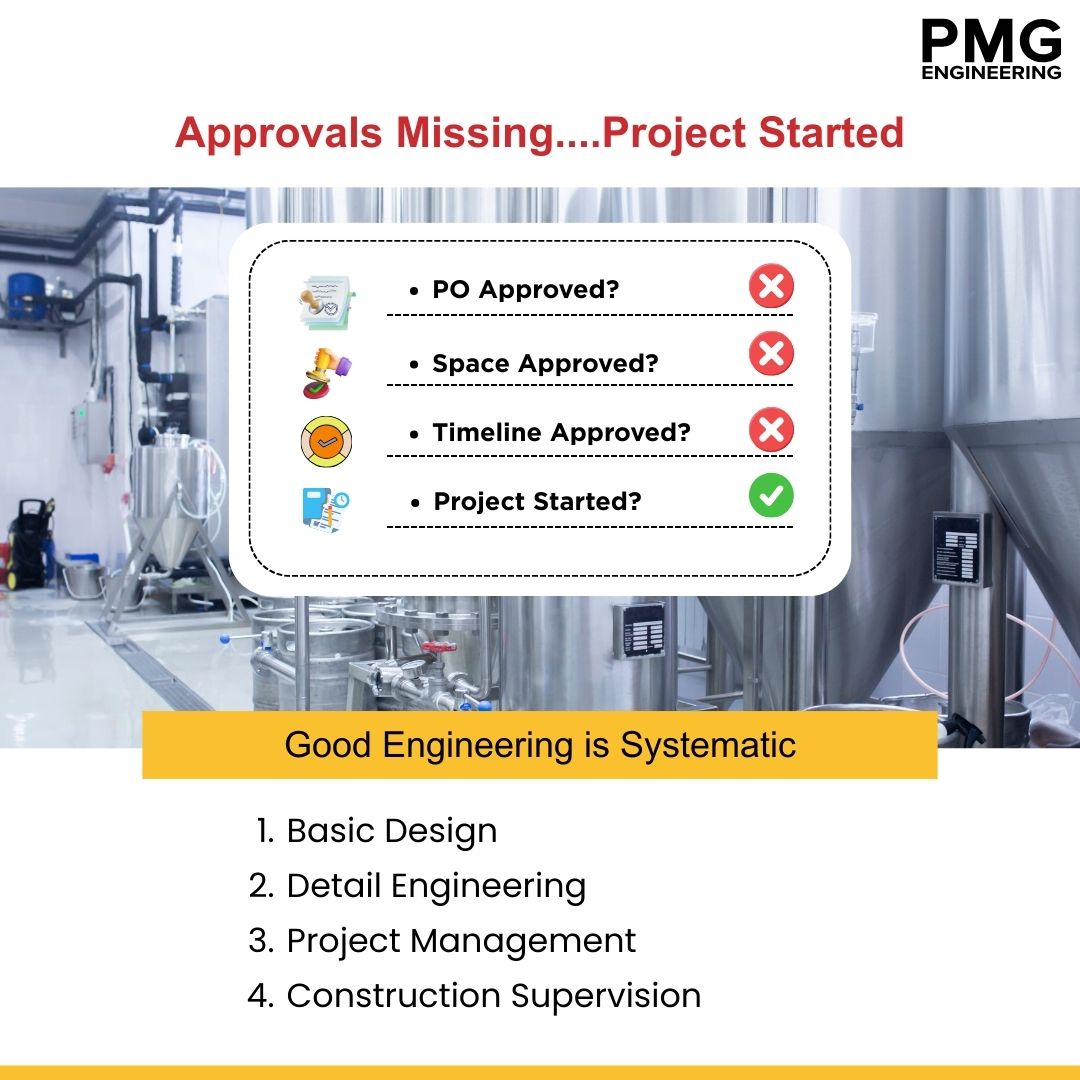
Starting a project without proper approvals can lead to delays, rework, cost increases, and compliance issues. Systematic engineering helps keep projects planned and controlled.
It happens more often than most food and beverage plants admit: the PO is not approved, the space is not approved, the timeline is not approved — and yet the project has started. Work begins on the floor because someone is under pressure to show progress, and the three decisions that actually govern cost, layout and schedule are still open. Every one of those open items comes back later as rework, as equipment that will not fit the space allotted, or as a commissioning date nobody can defend.
The checklist is deliberately blunt. PO approved, space approved, timeline approved — these are the gates. If the answer to any of them is no, then "project started" is not progress; it is exposure. Commercial commitment without an approved PO, equipment selection without an approved space envelope, and execution without an approved timeline all push the correction downstream, where it costs the most.
Good engineering is systematic. The sequence PMG works to is Basic Design, then Detail Engineering, then Project Management, then Construction Supervision. Basic Design fixes the concept and the space it must live in. Detail Engineering turns that into buildable, procurable information. Project Management holds the approvals, the money and the schedule together. Construction Supervision makes sure what gets built is what was engineered. Taken in order, each stage closes the approvals the next stage depends on — which is exactly why skipping ahead is so expensive.