
Common Myths in Food Factory Engineering - Design Truths That Matter
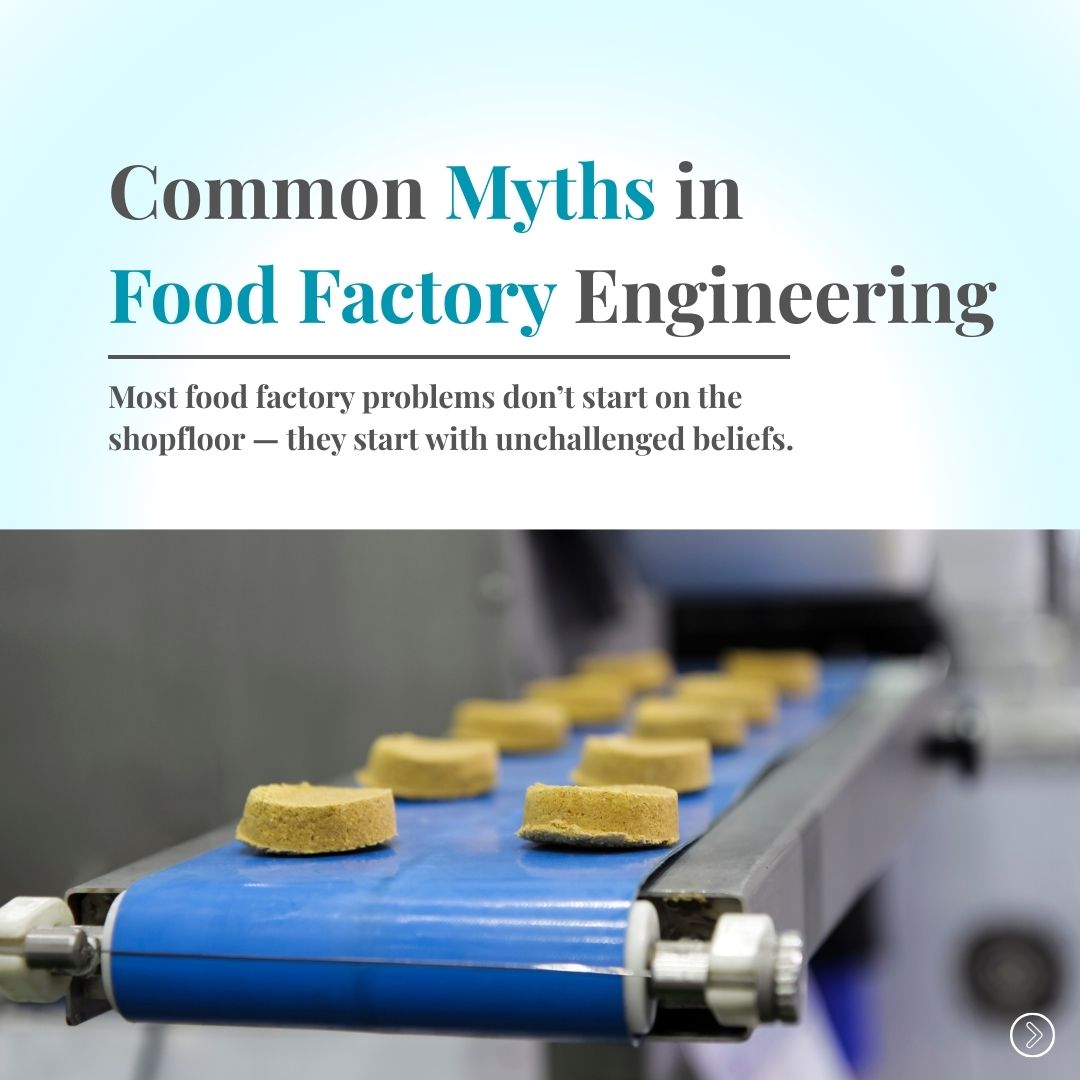
Food factory engineering is often influenced by common assumptions. Understanding the right design approach can improve hygiene, efficiency, safety, and long-term performance.
Most food factory problems do not start on the shopfloor. They start with unchallenged beliefs carried into the design stage — assumptions about equipment, cleaning, utilities and automation that go unquestioned until they show up as congestion, downtime or hygiene failures in a running plant.
Seven beliefs do most of the damage. That imported or premium equipment guarantees compliance — when compliance is actually built through hygienic zoning, product and people flow, drainage, access and utilities, and a world-class machine inside a poor layout does not reduce the risk. That the design can be optimized during execution — when late changes are not optimizations but compromises, and design errors become expensive once building and equipment are in place. That designing for higher capacity is smart — when over-design creates congestion, hygiene stress and operator fatigue, and good engineering balances capacity, operability and cleanability. That cleaning can be managed with SOPs — when a design that resists cleaning will defeat any SOP, because hygienic engineering is structural, not procedural.
The remaining three are just as costly. Utilities are not secondary systems: utilities decide uptime, and when air, water, steam, power or drainage struggle, production stops. Not all food factories face the same challenges — every product, process and risk profile is different, and copy-paste design leads to copy-paste failures. And automation does not reduce all problems; it amplifies design flaws, so if the flow is wrong, automation only makes mistakes faster and costlier.
Food factories don't fail by accident. They fail when myths guide design decisions. Building world class food factories starts with challenging those beliefs before the layout is frozen.