
Drainage Slope in Food Zones: Prevent Pooling & Contamination
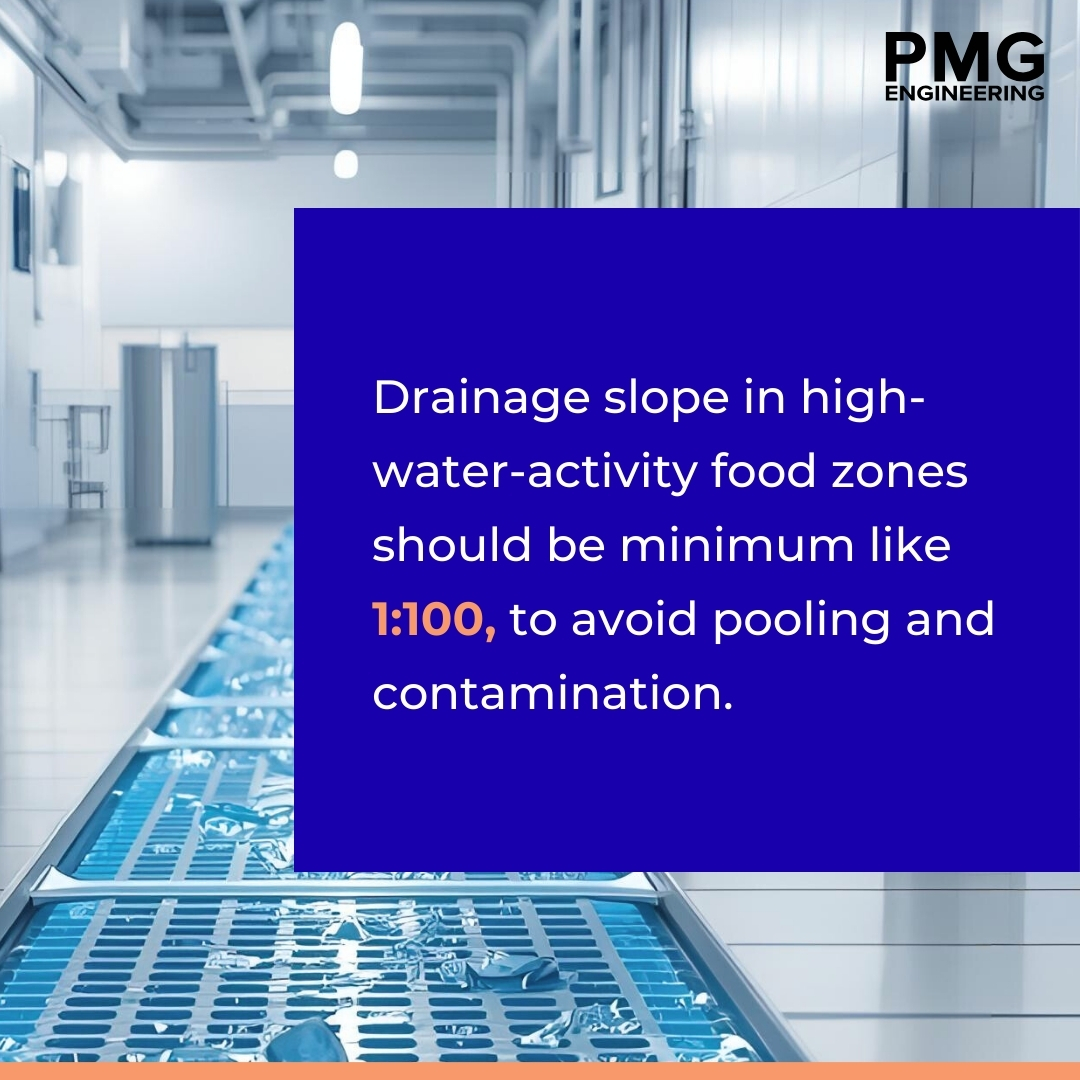
Proper drainage slopes help prevent water pooling, improve cleaning, and reduce contamination risks in food production areas.
In food zones where water activity is high — wet processing halls, wash-down areas, filling and packing rooms where floors are hosed regularly — the floor slope towards the drain is a hygiene design decision, not a civil detail. Water that cannot leave the floor sits in low spots, and standing water is where contamination starts.
PMG Engineering's working rule for these areas is a drainage slope of minimum 1:100 towards the drainage channel. That gradient is enough to move wash-down water and process spillage off the floor surface continuously, so the floor dries between shifts instead of holding pools that carry soil and microbial load back into the production area.
Because the slope has to be built into the floor screed, it is fixed at the civil stage and is expensive to correct later. Getting the fall, the drain line positions and the channel levels agreed before the floor is laid is what keeps a wet food zone genuinely cleanable for the life of the plant.