
Pesto
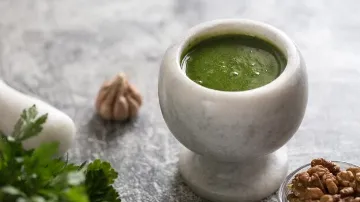
Pesto, a vibrant and flavorful Italian sauce, crafted from fresh basil, pine nuts, garlic, Parmesan cheese, and olive oil, embodies the essence of Mediterranean cuisine. Its aromatic herbs and nutty undertones lend a burst of freshness to pasta, sandwiches, pizzas, and more, making it a versatile culinary delight cherished by food enthusiasts worldwide.
Pesto is a traditional Italian sauce that originated in the Liguria region of Italy. It is made from fresh basil leaves, garlic, pine nuts, Parmesan cheese and olive oil, blended together to create a thick, aromatic paste. Because the product is defined by the freshness and aroma of its raw materials rather than by heavy thermal processing, commercial manufacture is largely a question of ingredient handling, controlled blending and packaging that protects the paste from oxidation.
Commercial production runs in four stages. Ingredient preparation covers harvesting, washing and drying the fresh basil leaves, alongside preparation of the pine nuts, garlic, Parmesan cheese and other ingredients. Blending brings the prepared ingredients together in a food processor or blender to create a smooth paste. Packaging fills the pesto into glass jars or plastic containers, often with a protective layer of oil on top to prevent oxidation and maintain freshness. Finally, storage and distribution hold the product in temperature-controlled warehouses before shipment to retailers or directly to consumers.
The market scope for pesto has been growing steadily in recent years, driven by increasing demand for fresh, healthy and flavourful food products. Major players in the pesto market include Barilla, Nestle, Sacla, Giovanni Rana, Seggiano, Filippo Berio, La Famiglia Rana and Lucini Italia. For a processor entering this category, the plant design questions follow directly from the product: clean handling of fresh herbs, blending equipment that delivers a smooth paste, filling lines suited to glass jars or plastic containers, and temperature-controlled warehousing to hold quality through distribution.