
Heat exchangers
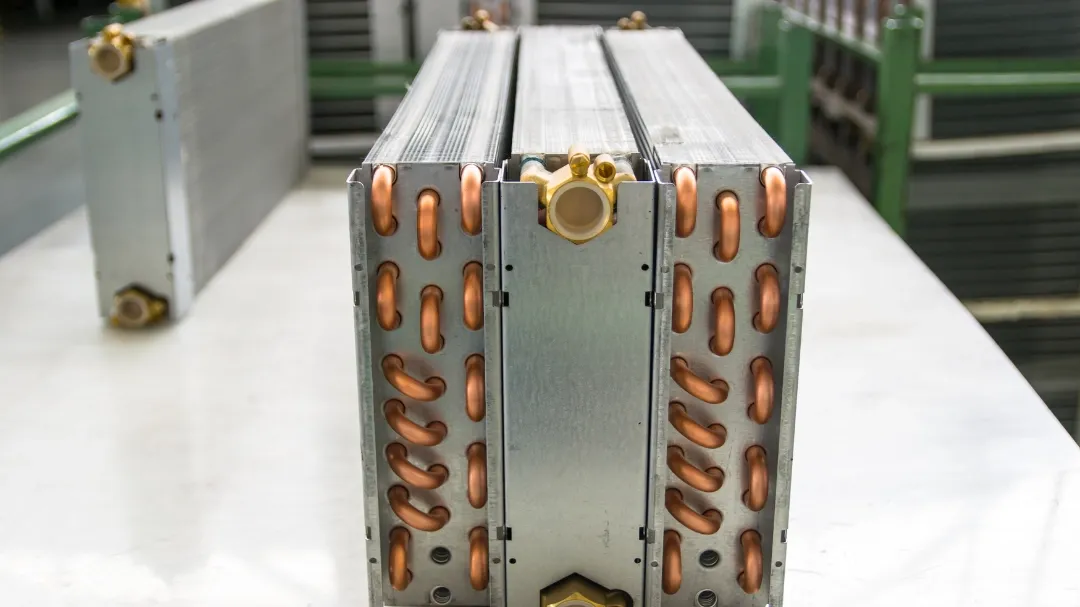
Thermal energy is transferred from one solid or fluid to another in a heat exchanger. Heat transfer equations are used in the design of the equipment to calculate this energy transfer to carry it out efficiently and under controlled conditions. Heat exchangers use innovative designs to maximize efficiency to meet processing requirements for a wide range of products with varying viscosities.
A heat exchanger is equipment designed to transfer heat between two or more fluids of different temperatures. In food and beverage plants it is the workhorse behind temperature control: it holds fluid temperatures in processing systems to meet filling, pasteurisation and food safety requirements, reduces or eliminates microbes so products are safe for consumption and protected from spoilage, and delivers the precise temperature and holding time combination a process demands.
Three design characteristics govern the selection. Flow configuration describes the direction of fluid movement within the exchanger relative to each other — parallel flow, antiparallel, perpendicular, or a combination of these. Construction method covers the components used, most commonly shells, tubes, spiral tubes (coils), plates, fins and adiabatic wheels. Heat transfer mechanism distinguishes direct contact from indirect contact processes, and single-phase exchangers, where the fluids undergo no phase change, from two-phase exchangers, where a phase change can occur in either or both fluids.
Shell and tube exchangers are built from a single tube or a series of parallel tubes encased within a sealed, cylindrical pressure vessel; one fluid flows through the tubes and the other around and between them inside the shell. They suit viscous products with particulates in food, dairy and beverage markets, offer a low-maintenance in-line heating option and are preferred where complete drainability is required. Double pipe exchangers use two or more concentric cylindrical pipes, with one fluid in the smaller tube and the other circulating in the larger tube around it; their smaller diameters suit high-pressure applications, and they are cheap for both design and maintenance — a good choice for small industries — though efficiency is low.
Plate-and-frame exchangers are constructed of several thin, corrugated plates bundled together, each pair forming a channel for one fluid, with the pairs stacked and joined to create a second passage for the other. Their low steam temperature requirement makes them an attractive option for CIP systems; they are extensively used in the food industry, are highly efficient and typically have a small footprint. Condensers, evaporators and boilers employ a two-phase heat transfer mechanism in which one or more fluids change phase from liquid to gas or gas to liquid, and are used in distillation and refinement processes, HVAC and refrigeration.